

The post The Growing Black Bear Population Spreading Across New Hampshire Forests appeared first on A-Z Animals.
Quick Take
-
New Hampshire supports a stable population of black bears, concentrated in forested northern and central regions but increasingly present statewide.
-
Bears rely on seasonal food cycles, with spring vegetation, summer berries, and fall mast driving movement and survival.
-
Habitat ranges from the White Mountains to fragmented southern forests, shaping density and behavior across regions.
-
Management, hunting, and public awareness help maintain balance and reduce conflict as bears continue expanding into human areas.
New Hampshire’s landscape, defined by extensive forests, rugged mountains, and scattered rural development, provides strong habitat for black bears across much of the state. Although smaller in geographic size than many other bear states, New Hampshire supports a well-established and closely managed population that occupies nearly all regions, from the White Mountains to lower-elevation woodlands in the south.
Bears in New Hampshire are often present but not always visible, moving through dense cover and avoiding human activity when possible. However, as development expands into forested areas and natural food availability fluctuates, encounters with people have become more common. Understanding how black bears use New Hampshire’s landscape is key to maintaining a stable population while reducing conflict.
Thriving New Hampshire Bears
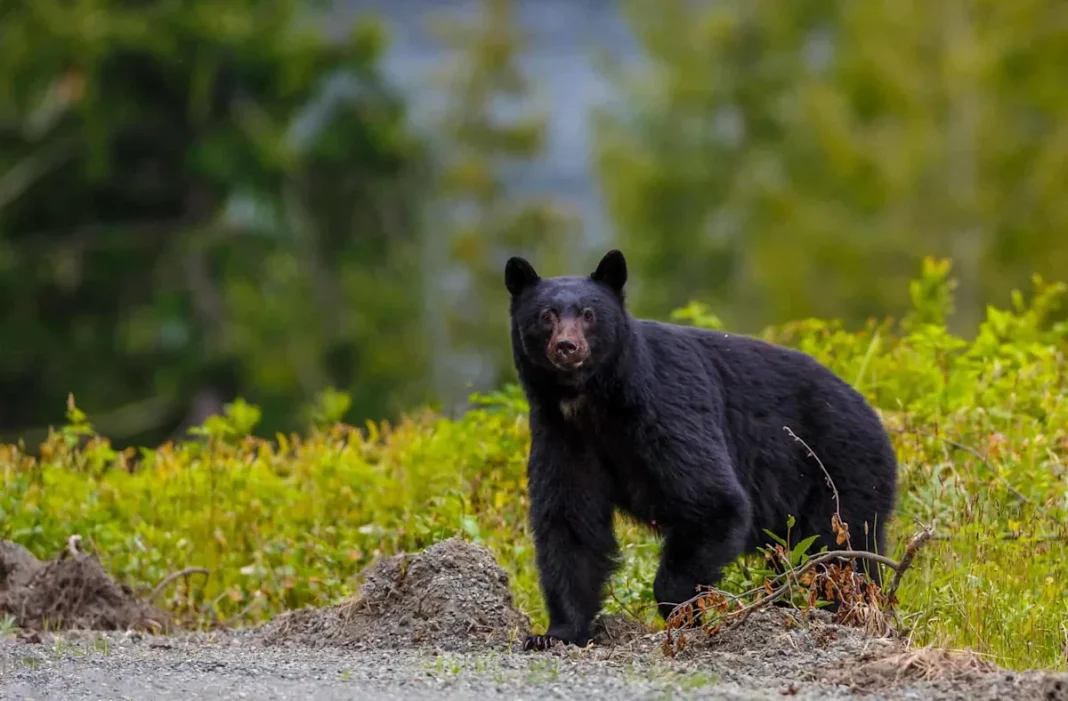
The American black bear, Ursus americanus, is the only bear species found in New Hampshire. The state’s population is estimated at approximately 5,600 individuals, a number that has remained relatively stable over recent years due to consistent wildlife management practices.

Black bears are numerous and their population is growing in New Hampshire.
©Frank Fichtmüller/iStock via Getty Images
(Frank Fichtmüller/iStock via Getty Images)
Historically, black bears declined due to unregulated hunting and habitat loss, but conservation efforts throughout the twentieth century allowed populations to recover. Today, the New Hampshire Fish and Game Department monitors bear numbers through field studies, harvest data, and long-term observation. Regulated hunting helps maintain a balance between the bear population and available habitat, preventing overpopulation, especially in areas with increasing human development.
Bears are most abundant in northern and central New Hampshire, where forest cover remains continuous and human population density is lower. However, they are present throughout much of the state, including southern areas where habitat is more fragmented.
How Do Black Bears Compare?

There are more black bears in the U.S. than brown bears.
Compared to brown bears, found in western North America, black bears are much smaller. They’re still big, though; they are the largest land mammal in the state. Adult females typically weigh between 100 and 200 pounds, while males often range from 150 to 300 pounds, with some individuals exceeding these weights in years with abundant food. In contrast, brown bears can reach well over 600 pounds or more, making black bears lighter, more agile, and better suited to densely forested environments where maneuverability matters more than sheer size.
Their physical build is adapted to New Hampshire’s rugged, heavily wooded terrain. Strong shoulders and forelimbs allow them to dig, tear into logs, and move efficiently across uneven ground, while curved claws provide traction for climbing trees and navigating steep slopes. Thick fur offers insulation during long winters, particularly in higher elevations, and their relatively compact body size helps conserve energy. Above all, their highly developed sense of smell drives their movement, allowing them to locate scattered food sources across large forested areas.
About Those Adorable Cubs
Black bears have a clever reproductive strategy that helps them survive as a species in a place where food availability varies widely. By delaying implantation until fall, females ensure that pregnancy proceeds only if they have accumulated enough fat reserves during the critical feeding period. Cubs are then born during winter dormancy, when the mother can remain in the den and conserve energy while nursing. This timing allows cubs to emerge in spring when food becomes available, increasing their chances of survival. This strategy is highly effective in a climate with long, resource-limited winters.

Never get between a mama bear and her cubs!
©Robert Harding Video/Shutterstock.com
(Robert Harding Video/Shutterstock.com)
Where in New Hampshire Do Most Bears Live?
Black bears are found throughout New Hampshire, but their density varies by region. The northern part of the state, including the White Mountains and surrounding forests, supports the highest concentrations. These areas provide extensive habitat with minimal fragmentation, allowing bears to maintain large home ranges.
Central New Hampshire also supports a strong population due to its mixed forests and lower levels of development, which provide suitable conditions. In southern New Hampshire, bears are less common but increasingly present. As populations grow, younger bears disperse into these areas, following forest corridors and river systems that connect larger habitat blocks.
This statewide distribution reflects both habitat availability and the species’ adaptability. Even in areas with higher human presence, bears are able to persist by adjusting their behavior and movement patterns.
The White Mountains Stronghold
The White Mountains form the core of black bear habitat in New Hampshire. This region includes extensive forest cover, rugged terrain, and a range of elevations that support diverse plant communities. These conditions create a steady supply of food throughout the year, from spring vegetation to fall mast.

The White Mountains of New Hampshire are prime real estate for bears.
©Richard Cavalleri/Shutterstock.com
(Richard Cavalleri/Shutterstock.com)
Large protected areas, including national forest land, provide additional support by limiting development and reducing human disturbance. Bears in this region tend to exhibit more natural behavior patterns, with less reliance on human food sources compared to those in more developed areas.
Elevation plays an important role in food availability, as different plant species produce fruit and nuts at different times. Bears can move between elevations to take advantage of these shifting resources, allowing them to maintain consistent feeding throughout the growing season.
Central Forests and Movement Corridors
Central New Hampshire contains a mix of forest types, wetlands, and developed areas that create a more fragmented but still functional habitat. Bears in this region often move along natural corridors such as ridgelines, river valleys, and forest edges, which provide cover and access to food.
Regenerating forests and timber harvest areas are particularly important, as they produce berries and other vegetation that attract bears during the summer months. These areas can concentrate bear activity, especially when food is abundant.
Connectivity between habitat patches is essential in this region. Forest corridors enable bears to move between northern and southern areas, supporting population stability and genetic diversity. As development increases, maintaining these habitat connections becomes even more important.
Southern New Hampshire: Expanding Range
Southern New Hampshire represents the edge of the state’s bear range, where higher human population density and reduced forest cover limit bear numbers. However, bears are becoming more common in this region as populations expand and individuals disperse from higher-density areas.

Bear numbers are more limited in the southern part of the state, which has denser human population.
©RishiKamdar/Shutterstock.com
(RishiKamdar/Shutterstock.com)
Habitat in southern New Hampshire consists of smaller forest patches interspersed with residential and commercial development. Bears in this region often move at night and rely on edge environments, where forest meets open land. These conditions increase the likelihood of encounters with people, particularly when food sources such as garbage, bird feeders, and crops are available. Although population density remains lower than in the north, the frequency of sightings is increasing. This makes the region a focal point for education and conflict prevention.
Seasonal Behavior Patterns
Black bear behavior in New Hampshire follows a well-defined annual cycle shaped by colder temperatures, shorter growing seasons, and the state’s heavily forested, mountainous landscape. Compared to more southern states, seasonal transitions are more abrupt, and food availability is concentrated into shorter periods. As omnivores, bears adjust both their movement and diet throughout the year, responding closely to elevation, forest composition, and the timing of plant growth.
Spring
In New Hampshire, bears typically emerge from their dens in April, though timing varies depending on elevation and snowpack. In higher elevations of the White Mountains, bears may remain denned longer due to lingering winter conditions, while those in lower elevations emerge earlier. At this stage, bears are in a depleted physical condition after months of dormancy and initially limit their movement to areas where snow has melted. Early feeding focuses on easily digestible foods, such as grasses, sedges, buds, emerging leaves, insects, and carrion. South-facing slopes, river valleys, and lowland forests provide the first reliable food sources. Activity levels increase gradually as vegetation becomes more widespread and bears regain strength.
Summer
As temperatures rise and forests fully leaf out, food becomes more abundant across the landscape. Bears expand their movements, traveling widely through mixed hardwood forests, regenerating clearcuts, and forest edges. Their diet shifts heavily toward soft mast, particularly blueberries, raspberries, and blackberries, which are common in logging areas, trailsides, and open forest patches. Insects also remain an important food source during this time. Because these foods are scattered, bears move extensively within their home ranges, often following predictable foraging routes. Activity is typically concentrated during early morning and evening hours, though in more remote areas with minimal human disturbance, bears may remain active throughout the day.

Bears eat a wide variety of nuts, berries, insects, and small wildlife.
©Elizabeth Caron/Shutterstock.com
(Elizabeth Caron/Shutterstock.com)
Fall
Autumn is the most critical feeding period in New Hampshire, as bears enter hyperphagia and dramatically increase their food intake to prepare for winter. Hard mast becomes the primary food source, especially acorns and beechnuts produced by mature hardwood forests. Bears may travel long distances to locate productive mast areas, and their movement patterns become more focused on these food-rich zones. Success during this period is essential, as fat reserves built in the fall determine winter survival and reproductive success. In years when mast crops fail, bears expand their range and are more likely to seek out alternative food sources, including those near human habitation, increasing the chance of encounters.
Winter
By late October through December, most bears enter dens, with timing influenced by food availability and weather conditions. In New Hampshire, winter dormancy is more consistent than in southern states due to colder temperatures and longer winters. Bears typically den in sheltered locations such as hollow trees, rock cavities, or ground nests lined with vegetation. During this period, their heart rate and metabolism decrease significantly, allowing them to survive without eating, drinking, or producing waste. Females give birth in the den, usually in January, and remain with their cubs until spring. Unlike in warmer regions, bears in New Hampshire rarely emerge during winter and remain largely inactive until conditions improve.

Black bears choose dens in caves, fallen logs, or burrows.
©Susan Rogers/Shutterstock.com
(Susan Rogers/Shutterstock.com)
How Does the State Manage Its Bears?
The New Hampshire Fish and Game Department manages black bears through research, regulated hunting, and public outreach. Monitoring methods include tracking harvest data, conducting field surveys, and studying bear movement patterns.
Hunting is used as a management tool to maintain population balance and reduce conflict in areas where bears are more likely to encounter people. Seasons and regulations are adjusted based on population trends and habitat conditions.
Public education programs focus on reducing access to human food sources and promoting safe behavior in bear habitat. These efforts are essential for maintaining coexistence as bears continue to occupy a wide range of environments.
Bear Safety and Prevention
Reducing conflicts with black bears in New Hampshire depends largely on limiting access to food. Garbage should be secured, and attractants such as bird feeders and pet food should be managed carefully. In areas where bears are active, these steps can significantly reduce the likelihood of visits.

A black bear looking for food in a construction dumpster.
©BeyondMyLens/iStock via Getty Images
(BeyondMyLens/iStock via Getty Images)
When hiking or spending time outdoors, making noise and staying alert can help avoid surprising a bear. If an encounter occurs, maintaining distance and remaining calm are key. Backing away slowly and avoiding sudden movements can encourage the bear to leave.
In rare cases where a bear becomes aggressive, making oneself appear larger and using loud noise can deter the animal. If physical contact occurs, fighting back is recommended for black bears. Playing dead is advised for brown bears, a much larger species not found in New Hampshire.
A Lasting Presence in New Hampshire’s Forests
Black bears remain a stable and important part of New Hampshire’s natural environment. Their continued presence reflects the strength of the state’s forest ecosystems and the effectiveness of long-term wildlife management.
As bears expand into new areas and interactions with people increase, maintaining a balance between conservation and coexistence becomes more important. With proper awareness and management, New Hampshire can continue to support a healthy bear population, minimize conflict, and preserve its forested landscape.
The post The Growing Black Bear Population Spreading Across New Hampshire Forests appeared first on A-Z Animals.