

NEED TO KNOW
-
A 37-year-old American hiker in the French Alps was airlifted to the hospital after being bitten by a snake
-
The hiker had a severe reaction following the bite and fell unconscious, and he was later admitted to the Grenoble Alpes University Hospital’s trauma unit
-
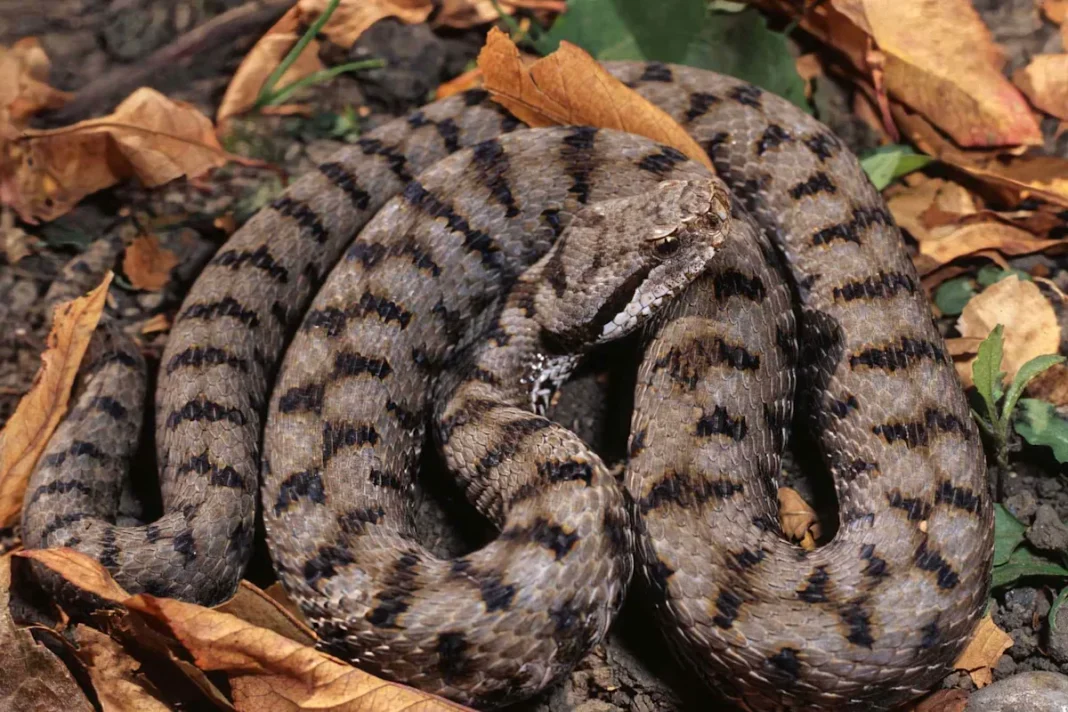
Experts suspect that he may have been bitten by the venomous asp viper snake, which is found in the Alps
An American hiker had to be airlifted out of the French Alps after being bitten by a snake.
The hiker — who was identified only as a 37-year-old man — had been with two other Americans in the hills above Veurey-Voroize, on the northern edge of the Vercors massif, when he was bitten by a red and black snake, according to Connexion France and local news outlet Le Dauphiné Libéré.
The American hiker had a severe reaction to the bite, and his condition deteriorated rapidly, prompting his companions to alert emergency services. It is unclear what led up to the snake bite.
A Compagnies Républicaines de Sécurité (CRS) Alpes mountain rescue unit and a doctor from France’s emergency medical service SAMU were dispatched to the scene via a Civil Security helicopter, per Le Dauphiné Libéré.
When they arrived on the scene, they found the hiker unconscious but still breathing, and administered emergency aid. The man was then airlifted to Grenoble Alpes University Hospital, where he was admitted to the trauma unit.
It was unclear what kind of snake could have bitten the hiker, though there are several venomous species across the Alps, including the asp viper and the common adder, per Naturpark Ötztal.

Vercors Natural Park
Credit: Getty
Jean Andrieux, a park ranger for Vercors Natural Park who confirmed the incident to Connexion France, said he believed it could have been an asp viper, which can have red and black coloring.
“In France, in the Vercors massif, there are more than 10 species of snakes. Some are quite common, others are rare. There is one species of viper among the four species found in France. That is the asp viper,” Andrieux told the outlet, adding that the species is common in the area.
Andrieux noted that asp viper bites are rare and that the chances of a severe reaction from a bite in humans are on the lower side.
“Most bites are what we call ‘dry bites,’ meaning the viper bites but does not inject venom. It is a defensive reaction — it is scared, it bites, but does not release venom,” he said.
However, some bites do contain venom, which can be especially dangerous if a person is allergic, Andrieux told Connexion France. The park ranger recommended erring on the side of caution when hiking.
Never miss a story — sign up for PEOPLE’s free daily newsletter to stay up-to-date on the best of what PEOPLE has to offer, from celebrity news to compelling human interest stories.
“What is also important to know is that a snake will never attack a hiker on its own,” Andrieux told the outlet. “A snake does not attack people. It only bites in self-defense — for example, if it is touched or accidentally stepped on.”
“If you encounter a snake, the best thing to do is to go around it at a safe distance and continue on your way,” he added.
PEOPLE has reached out to Compagnies Républicaines de Sécurité and Vercors Natural Park for comment on the incident.
Read the original article on People