
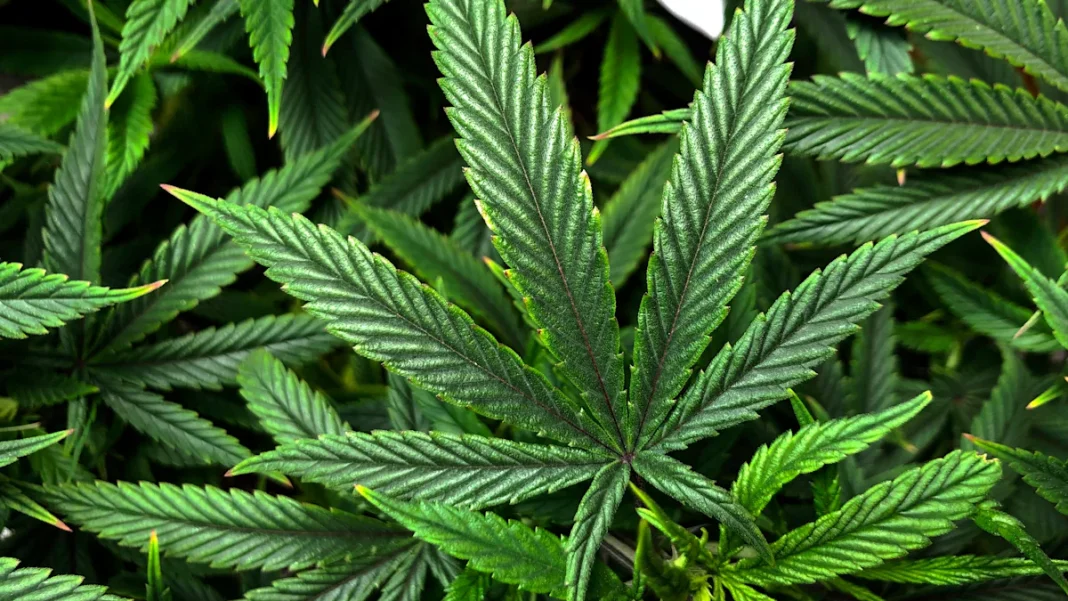

Acting Attorney General Todd Blanche signed an order on Thursday reclassifying state-licensed medical marijuana as a less dangerous drug.
In a post on X, Blanche announced that he was “immediately rescheduling FDA-approved marijuana and state-licensed marijuana from Schedule I to Schedule IIl” and initiating expedited hearings to “fully reschedule marijuana.” Those hearings will begin on June 29.
“These actions will enable more targeted, rigorous research into marijuana’s safety and efficacy, expanding patients’ access to treatments and empowering doctors to make better-informed healthcare decisions,” Blanche wrote on X.
Rescheduling marijuana has no impact on its legality. It won’t change laws in states that allow medical and recreational use or affect people who have been convicted of pot-related offenses.
The decision is still important, though. Moving marijuana to a lower category will make it easier for researchers to study its effects, which many experts say is sorely needed. It would also mark a major turning point in the country’s remarkable evolution with the drug over the past two decades.
The share of people who say they regularly use marijuana has doubled over the past 13 years, as legalization has spread throughout the country. Nearly 80% of Americans now live in a county with at least one legal marijuana dispensary, and the size of the legal pot market has more than tripled over the past decade. Support for legalizing weed has doubled since 2000.
Despite all of this change, efforts to research the potential harms and benefits of a drug that millions of Americans now regularly use have been limited by the federal government’s decision to keep marijuana in Schedule I, the most restrictive category reserved for truly dangerous drugs with no currently accepted medical use.
“Scientists have led very few thorough examinations of any effects of cannabis products,” a group of drug researchers from the University of Michigan wrote earlier this year, adding that the Schedule I classification of marijuana “has limited scientists’ ability to study cannabis and its effects, even as Americans’ access to cannabis has exploded in recent years.”
How we got here
In 1970, Congress passed the Controlled Substances Act, which created tiered categories — called schedules — for different types of drugs based on their benefits and potential risks.
Marijuana was placed in Schedule I, a category for drugs with “no currently accepted medical use and a high potential for abuse.” Other Schedule I drugs include heroin, LSD, ecstasy and peyote. Schedule III, its potential new classification, is a category for drugs that present a moderate or low risk of dependency and have widely accepted medical uses. Other Schedule III drugs include ketamine, anabolic steroids, testosterone and certain painkillers with codeine.
Despite a substantial body of scientific research showing marijuana’s potential medical benefits and evidence that it is not nearly as dangerous as some other drugs in the same category, marijuana remained in Schedule I for 56 years. Various advocacy groups, researchers and lawmakers have mounted efforts to get the government to reschedule marijuana over the past 50-plus years. All of them came up short.
The tide began to turn in 2024, when former President Joe Biden started the formal process of changing marijuana’s classification. Delays caused by legal challenges and opposition from Republicans in Congress meant that the Biden administration wasn’t able to complete the change before the end of his presidential term. That left the matter in President Trump’s hands.
In December, Trump signed an executive order calling on his administration to expedite marijuana’s rescheduling.
“The Federal Government’s long delay in recognizing the medical use of marijuana does not serve the Americans who report health benefits from the medical use of marijuana to ease chronic pain and other various medically recognized ailments,” he wrote.
The president expressed frustration this month with the slow pace of the process while signing an order to loosen federal restrictions on certain psychedelics. “Will you get the rescheduling done, please?” he said to members of his Cabinet. “They’re slow-walking me on rescheduling.”
Polls show that an overwhelming majority of Americans support medical marijuana, but there are still some groups that oppose rescheduling it.
“Rescheduling means a $2 billion tax break for Big Weed. It means more drugs and more users in our communities. It means more quality-of-life problems and more crime. It means more kids getting hooked thanks to pumped-up advertising budgets within the addiction industry,” Smart Approaches to Marijuana, an organization that says it advocates for a health-first approach to marijuana policy, wrote in a letter to Trump last year.
Republicans generally are much more skeptical of recreational marijuana use than Democrats, and their support for legalization has dropped considerably over the past two years. But that hasn’t translated to their views on medical use, which 81% of self-identified Republicans support.