
NEED TO KNOW
-
A man who was bitten by more than 200 species of snake has helped scientists develop a new antivenom drug
-
Tim Friede, a herpetologist and venom expert, has spent two decades voluntarily letting hundreds of deadly venomous snakes bite him
-
His efforts allowed researchers to create an antivenom cocktail that can decrease the effects of certain snake bites
One man is opening up about willingly being bitten by more than 200 snakes — and scientists believe their research on his built-up immunity to venomous snake bites could help future snakebite victims.
Tim Friede, described as an autodidact herpetologist and venom expert by the biotech company Centivax, has spent two decades voluntarily letting hundreds of deadly venomous snakes bite him. According to scientists who published research last year in the journal Cell on the antitoxin antibodies Friede has developed, the man’s snakebite efforts have helped researchers create an antivenom cocktail that can reduce the effects of certain snake bites.
Speaking to NBC News and Science News last year, Friede shared that he had had a “simple curiosity” with venomous animals for years before he started injecting himself with small doses of snake venom to try to develop some immunity. He would increase the amount of venom he was injecting— which he milked from snakes himself — to try to build up his tolerance before letting venomous snakes bite him directly.
“At first, it was very scary,” Friede told NBC. “But the more you do it, the better you get at it, the more calm you become with it.”

A king cobra moves through its enclosure at the reptile house in the Bronx Zoo.
Credit: Andrew Lichtenstein/Corbis via Getty
He admitted to NPR last year that his experiments have been “a rocky road,” and recalled being “put in ICU after two cobra bites,” which put him “in a coma for four days.”
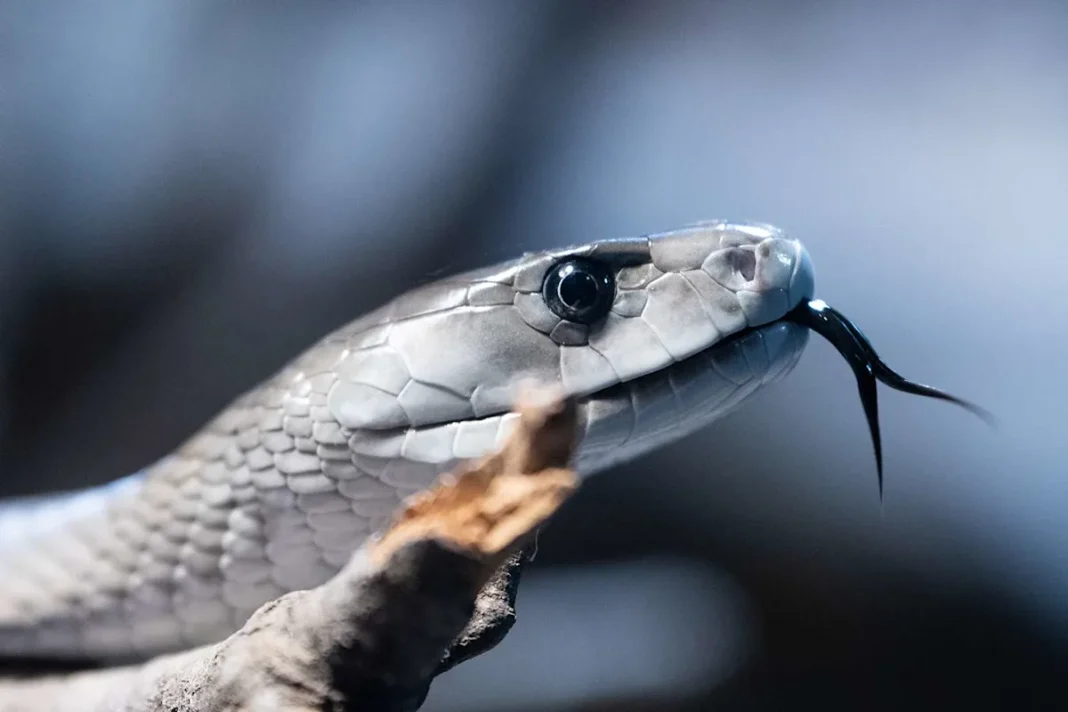
However, the process allowed Friede to successfully develop immunity to many different lethal snakes, including black mambas, king cobras, and tiger snakes.
He hoped his research would serve a purpose, too, he told NBC. Friede spent time emailing any scientist he could find and asking them to study his tolerance.
Eventually, one group of researchers got back to him and found that the immunity Friede had built up to snakes over the decades made him a hyperimmune human blood donor with antibodies that could be used in antivenom developments.
Never miss a story — sign up for PEOPLE’s free daily newsletter to stay up-to-date on the best of what PEOPLE has to offer, from celebrity news to compelling human interest stories.
“What was exciting about the donor was his once-in-a-lifetime unique immune history,” the study’s lead author and Centivax CEO, Jacob Glanville, said in a news release at the time. “Not only did he potentially create these broadly neutralizing antibodies, in this case, but it could also give rise to a broad-spectrum or universal antivenom.”
“If anybody has broken through the problem of getting the immune system to focus,” Glanville told NPR of Friede, “it’s this guy, by this repeated stimulation with all these snakes.”
There is a need for further research on antivenom. According to the World Health Organization (WHO), somewhere between 81,000 and 137,000 people die from snakebite every year, and around three times as many snake bites lead to amputations and permanent disabilities.
The process of creating antivenom can also be expensive and difficult, according to NBC, as it involves injecting large mammals like horses with venom and collecting the antibodies they produce.
However, researchers working with Centivax analyzed Friede’s unique antitoxin antibodies, enabling them to develop a new antivenom cocktail.
The cocktail was created by combining two of Friede’s antibodies with a toxin-blocking drug. Researchers found that the antivenom protected mice completely against 13 snake species and partially against six more.
“This is critical, because although there are millions of snake envenomations per year, the majority of those are in the developing world, disproportionately affecting rural communities,” Glanville said of the research.
According to Centivax, the next stage of testing for the antivenom treatments is set to take place in Australia, using dogs brought in for snakebite injuries.
“I couldn’t believe it. I really couldn’t believe it,” Friede said of learning about the results of the research and the resulting cocktail. “I know I’m doing something for humanity and giving back to science.”
As for Friede’s snake-biting habit, it’s been several years since he’s had such close contact with a venomous reptile.
“[But] to know you can beat that and keep your calm and keep your cool, it’s a wonderful thing,” he told NPR.
Read the original article on People