
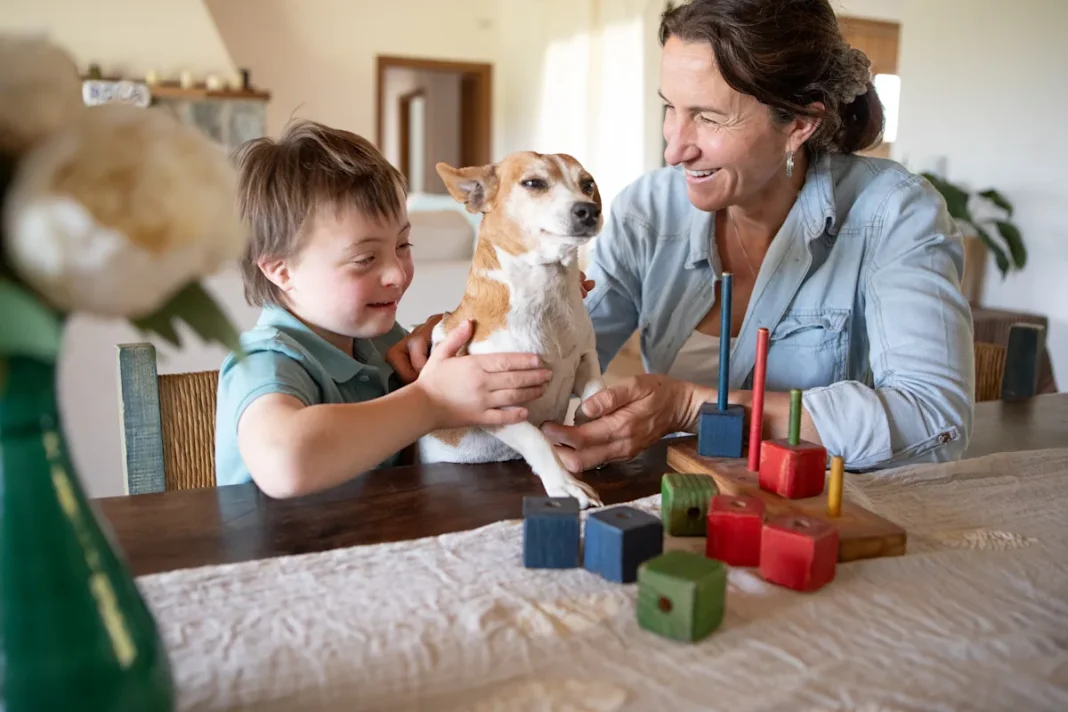

Many people wonder whether one can love a dog as much as a baby. And no, it is not just a sentimental query. It is a subject of genuine scientific interest and deep emotional debate. For many, the answer is a profound ‘yes.’ Companionship needs are continuously evolving, and the bond between humans and their canine counterparts has grown. They often resemble parental bonding patterns.
However, an important distinction remains. The intensity of the emotion may feel identical. However, the nature of love can differ due to biology and experience.
Science Confirms Similar Brain Responses
Research from Harvard University and Massachusetts General Hospital provides insight into emotional bonding. For many women, the emotional attachment to their dogs is very similar to what they feel for their kids. MRI scans showed similar patterns previously noted in research.

The brain’s reward and emotion centers activate in similar ways when mothers view images of their own dogs and their own children. Both dogs and babies, for instance, trigger the release of oxytocin. As you know, it is known as the ‘love hormone’ or ‘bonding hormone.’ This fosters feelings of trust, affection, and nurturing.
Furthermore, dogs often exhibit ‘infantile’ features. They have large eyes, high-pitched vocalizations, and strong dependency, which tap into human caregiver instincts. Why do you think that we go ‘aww’ when we see a little puppy?
Or even a full-grown dog that looks like one? The brain can respond in similar ways to both, but it still distinguishes between human children and pets. The drive to protect and nurture is very deep and intrinsic.
Why the Bond Feels Equal or More Intense
For many, the love for a dog can feel more immediate and fulfilling than some human relationships. Some studies suggest that people may find dogs more emotionally fulfilling than romantic relationships. This is often linked to fewer expectations, complications, and lower stress levels.

As for children, pregnancy is a very long process that takes women on a rollercoaster ride of hormone-fueled emotions. Interactions with dogs can evoke strong emotional responses without the biological processes associated with pregnancy.
Here are a few factors that make our bonding with dogs so special:
Unconditional Devotion: Dogs often offer a consistent, non-judgmental love. One that is rarely interrupted by teen angst or arguments. Or maybe the complexities of human-to-human relationships.
Perpetual Childhood: Babies ultimately grow into independent adults. However, dogs remain dependent on their owners for their entire lives. This often reinforces the ‘parent-child’ dynamic.
Reduced Conflict: Pet parents often report fewer conflicts with their dogs than with human partners or children. This makes the relationship a source of safe, constant emotional comfort.
The Differences in Types of Love
So, everything we’ve said so far has mainly concentrated on the similarities. Scientific studies have also found subtle differences. Reward centers activate for both the child and the dog. However, brain regions associated with bonding and attachment show different responses. They showed more intense activity when mothers looked at their human children, in comparison to their dogs.

Finally, let us come to the people who have experienced both. They acknowledge that the intensity of the love for a dog can be just as strong as that for a child. However, the nature of the bond is different. A child represents an extension of oneself and a long-term, evolving human legacy. In contrast, a dog offers more immediate companionship.
Conclusion
The debate often comes down to personal experience. For those who do not have children, pets often fill the nurturing role entirely. For those who have both, the love for a dog may exist alongside the love for a child, perhaps different in nature, but equal in intensity.
Ultimately, science supports that the bond with a dog can be as profound and unconditional as any human connection, justifying the feeling that they are not just pets, but family members and true ‘babies’ of the heart.