
In his first primetime address since the start of the Iran war, President Trump declared on Wednesday that the U.S. operation in the Middle East was “nearing completion.”
“We are going to finish the job and we’re going to finish it very fast,” Trump said. “We’re getting very close.”
The president went on to say that U.S. forces would “hit” Iranian targets “extremely hard over the next two to three weeks” while his administration continues to push for peace talks, which Tehran has publicly resisted.
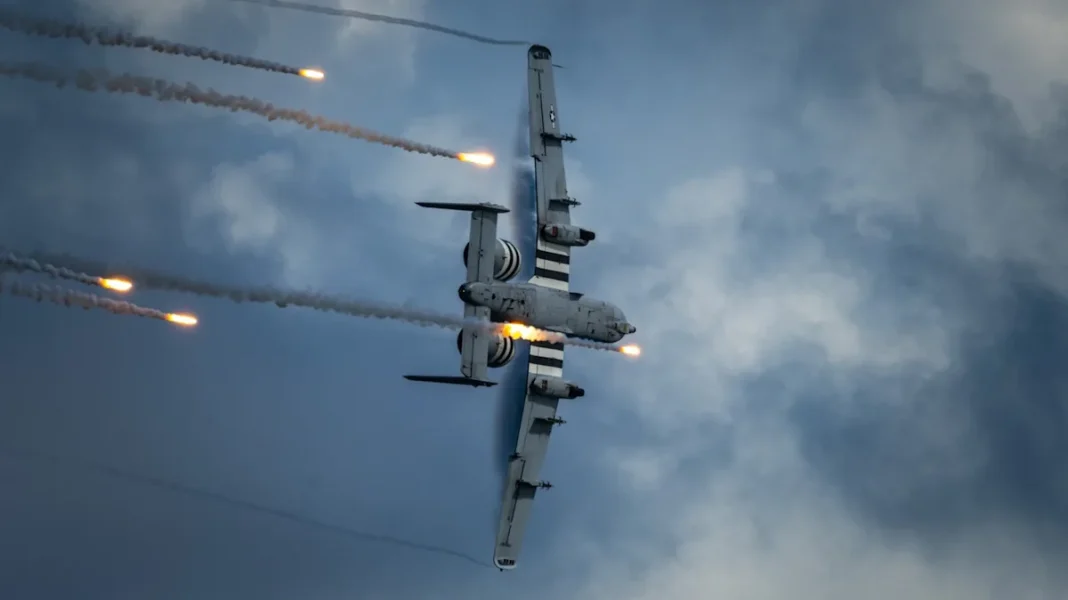
Two days later, on Friday, Iran shot down U.S. warplanes — an F-15E Strike Eagle and an A-10 Warthog — for the first time since the start of the war. Two American aviators were found and rescued; a third remained missing. Trump told reporters the attacks would not affect ceasefire negotiations with Tehran.
So if the war does end in the next few weeks, what will it have accomplished? Trump insisted on Wednesday that “our enemies are losing, and America — as it has been for five years under my presidency — is winning, and now winning bigger than ever before.”
But will Americans consider the operation a success if the Strait of Hormuz is still closed, if oil and gas prices are still sky-high and if the Iranian regime still holds power?
Here’s a rundown of what has changed because of the Iran war — and what hasn’t.
Crippling Iran’s military
All along, U.S. Central Command has said its primary military objective is “eliminating Iran’s ability to project power outside its borders in meaningful ways.” The administration now says that joint U.S. and Israeli strikes have largely accomplished that goal.
“We’ve done all of it,” Trump said in Wednesday’s speech. “Their navy is gone, their air force is gone. Their missiles are just about used up or beaten. Taken together, these actions will cripple Iran’s military, crush their ability to support terrorist proxies and deny them the ability to build a nuclear bomb.”

Smoke rises after an Israeli airstrike hits a building near the airport road in Beirut on March 31.
(Hussein Malla/AP)
Over the last month, CENTCOM has offered few details about specific attacks on Iran. But the cumulative scale of the onslaught is striking. According to a Wednesday release, the U.S. military has so far hit more than 12,300 targets in Iran — including command centers, the headquarters of the Revolutionary Guard, air defense systems, missile sites, navy ships and submarines. More than 13,000 U.S. combat flights have been completed; more than 155 Iranian vessels have been damaged or destroyed.
Meanwhile, Israel has conducted hundreds of waves of its own strikes, dropping more than 13,000 bombs on air defense systems, ballistic missile launchers, weapon production sites, nuclear facilities and various headquarters.
As a result, the rate of Iranian missile and drone strikes has plummeted. The U.S. has achieved such complete air superiority, Defense Secretary Pete Hegseth said on Tuesday, that the Air Force is now flying B-52 bombers directly over Iranian territory for the first time since the war began.
Even so, Iran retains the ability to inflict damage in the region. Attacks continue beyond its borders, and on Friday the Iranian military shot down a U.S. fighter jet over the country, forcing the U.S. to mount a search and rescue operation to find the two crew members before the regime could get to them.

A damaged Boeing E-3 Sentry aircraft following an Iranian strike on Prince Sultan Air Base in Saudi Arabia.
(Social media via Reuters)
Muddying the waters on Iran’s nuclear program
In June 2025, coordinated U.S. and Israeli attacks severely damaged three of Iran’s key nuclear facilities. Trump said at the time that the sites had been “completely and totally obliterated,” putting a “stop to the nuclear threat posed by the world’s No. 1 state sponsor of terror.”
But after abruptly ending ongoing negotiations and attacking Iran on Feb. 28, the president said that the regime had “attempted to rebuild their nuclear program” and insisted that the war would “ensure that Iran does not obtain a nuclear weapon.”
It is unclear if that goal has been met. In a video posted Wednesday on social media, Secretary of State Marco Rubio said that Iran had been trying to build a shield of missiles and drones “so that no one could do anything about their nuclear weapons program in the future.”
Destroying Iran’s missile and drone program will “finally” force the regime to “deal with the world seriously about never, ever having nuclear weapons,” Rubio predicted.
Perhaps serious nuclear negotiations will resume after the war. But so far, Iranian leaders have refused U.S. calls for a permanent end to uranium enrichment and the removal of all near-bomb-grade fuel.
In the meantime, that buried fuel — 970 pounds of 60% enriched uranium that could one day power 10 to 12 bombs — remains untouched.
And Trump now says that no longer bothers him. The uranium is “so far underground, I don’t care about that,” the president told Reuters on Wednesday. “We’ll always be watching it by satellite.”
If necessary, Trump added, “we’ll come back to do spot hits” — or one of his successors can just attack again. “[Iran] will not be able to do a nuclear weapon for years,” Trump said on Tuesday. “When they are ready … you’ll have a president that will be like me” and “knock the hell out of them again.”
With all of that in mind, experts say the war may have actually increased rather than decreased the risk of future conflict. “They still have the material and we still have no greater insight into … what they might do with it,” Emma Belcher, president of the nonproliferation foundation Ploughshares, told the Guardian. “We’ve also likely increased [Tehran’s] calculus that they will seek nuclear weapons to prevent the very kind of attack we’ve just witnessed.”
Closing the Strait of Hormuz
The Strait of Hormuz is a narrow waterway along Iran’s southern coastline that connects the Persian Gulf to the rest of the globe. Before the war, it was open. Now it’s closed.
That’s a big problem because one-fifth of the world’s oil flows through the strait, making it the most vital shipping lane on the planet.
It was no secret this could happen. Last month, the Wall Street Journal reported that top military officials warned Trump “an American attack could prompt Iran to close the Strait of Hormuz.” But Trump dismissed the risk, according to the Journal’s sources, telling his team that Tehran would surrender before closing the strait — and even if they tried, he continued, the U.S. military could handle the situation.
The administration has tried to force Tehran to reopen the strait in various ways: striking Iran’s 30 mine-laying ships; ramping up assaults on Iranian drones and naval vessels in the area; calling on U.S. allies to send warships to escort merchant vessels through the strait; and threatening to “hit and obliterate” Iran’s power plants unless the blockade ends.
None of it has worked — and as a result, Iran is now leaning into its newfound leverage over the world economy. “The strait of Hormuz will certainly reopen, but not for you,” Ebrahim Azizi, the chair of the Iranian parliament’s national security commission, wrote in a letter to the American people posted Tuesday on social media. “It will be open for those who comply with the new laws of Iran.”
In response, Trump has taken to saying that the blockade isn’t his problem because “the United States imports almost no oil through the Hormuz Strait,” as he put it in Wednesday’s speech (while continuing to threaten to decimate Iran’s energy infrastructure unless the strait reopens). Instead, Trump now says other countries should “take the lead in protecting the oil that they so desperately depend on.”
On Tuesday, the Journal reported that the president has “told aides he’s willing to end the U.S. military campaign against Iran even if the Strait of Hormuz remains largely closed” because they have “assessed that a mission to pry open the chokepoint would push the conflict beyond his timeline of four to six weeks.”
The British government said Thursday that military planners from 30 nations will talk next week about securing the Strait of Hormuz for shipping — but only “after the fighting has stopped,” insisted U.K. Prime Minister Keir Starmer.
Increasing the price of oil and gas
It’s true, as Trump said on Wednesday, that the U.S. is now the “No. 1 producer of oil and gas on the planet.” It’s also true that the U.S. imports very little oil and gas via the Strait of Hormuz.
But so far, neither of these advantages has shielded Americans from the war’s biggest economic impact: skyrocketing fuel costs.

Prices at a Shell gas station near the Marathon Petroleum refinery in Carson, Calif., on April 1.
(Jae C. Hong/AP)
That’s because global energy markets are interconnected — and “when there’s a supply disruption, like there has been for the past month in the Persian Gulf, the price of oil and gas rises everywhere,” as the New York Times recently explained.
Since the end of February, oil prices have jumped more than 50% — from about $71 per barrel before the first wave of attacks on Iran to about $112 per barrel today.
Oil is refined into gasoline, so gas prices rise along with oil prices. Since Feb. 20, the average price of a gallon of regular gas in the U.S. has shot up by more than a dollar, from $2.93 to $4.09, according to the American Automobile Association. That’s a 40% increase — the single largest one-month jump in the last three decades.
How long could these price shocks last? Goldman Sachs analysts recently predicted that even if Hormuz fully reopens in April, oil prices wouldn’t return to prewar levels until the end of 2026. And if the strait remains closed for just one more month, the price of oil could hover above $110 a barrel through the end of 2027.
So while Trump dismissed “the recent rise in gasoline prices here at home” as a “short-term increase” in Wednesday’s speech, that’s unlikely to be true.
Raising the cost of living
When oil and gas get more expensive, everything else tends to follow. Trucks use diesel to transport goods from one place to another; planes and ships use a lot of fuel as well.
Helium — a by-product of natural gas — is essential for manufacturing semiconductors; the war has drastically curtailed global supply. Smartphone prices could rise when existing helium stockpiles run low.
Natural gas is also an essential ingredient in fertilizer — roughly one-third of which passes through Hormuz. The longer the war goes on, the harder it will become for farmers to absorb these price shocks; the world’s food supply could take a major hit, and groceries could become significantly more expensive. Plastics (which are made from oil) could become pricier as well.
Even housing is being affected by the war. Why? Because rising energy costs create a risk of rising inflation. Already, the Organisation for Economic Co-operation and Development expects U.S. inflation to surge to 4.2% this year, up from 2.6% in 2025. In turn, markets tend to reflect inflation fears in the form of higher interest rates — which translate into higher borrowing costs for homeowners.
U.S. mortgage rates fell below 6% before the war started, but they have been climbing steeply ever since. This week, the average 30-year fixed mortgage rate hit 6.46% — the highest it’s been since September.
Killing Iranian leaders — but leaving the regime intact
U.S. and especially Israeli strikes have decimated the upper ranks of the Iranian regime, starting with the country’s supreme leader Ayatollah Ali Khamenei, who was killed on the first day of the war.
Other slain officials include veteran power broker Ali Larijani, intelligence minister Esmail Khatib and Basij paramilitary commander Gholamreza Soleimani.
On Wednesday, Trump said that “regime change was not our goal” — even though on Feb. 28 he told “great proud people of Iran” that “now is the time to seize control of your destiny” and “take over your government.”
Still, he insisted in his primetime address that “regime change” had “occurred because of all of their original leaders’ death.” He also argued that “the new group” of leaders “is less radical and much more reasonable” than their predecessors.
But experts say that may not be accurate. On March 8, Iranian clerics chose the slain ayatollah’s son, Mojtaba Khamenei, to take over as supreme leader.
Mojtaba Khamenei is known for his close ties to the Revolutionary Guard, and his selection signals that the “much more hard-line Revolutionary Guard side of the regime … is now in charge,” Vali Nasr, an expert at Johns Hopkins University, told the Times.

Members of the military during a dignified transfer of the remains of six U.S. Army service members who were killed in Kuwait, at Dover Air Force Base in Dover, Del., on March 7.
(Kevin Lamarque/Reuters)
Widening the rift with Europe
For more than 75 years, NATO has held the U.S. and its most powerful European allies together through a shared commitment to protect one another from outside threats.
But the Wall Street Journal reported Wednesday that Trump has been discussing the possibility of leaving NATO with key members of his administration — and the president confirmed as much in an interview with the British newspaper the Telegraph published the same day.
“I would say [it’s] beyond reconsideration,” Trump told the Telegraph. “I was never swayed by NATO. I always knew they were a paper tiger.” The president also complained that “they weren’t there for us” in Iran.
In response, French President Emmanuel Macron argued on Thursday that Trump — not Europe — was responsible for undermining the alliance.
“If you create doubt every day about your commitment, you hollow it out,” Macron said. “When we’re serious, we don’t say the opposite of what we said the day before.”